
AUDITABLE AGRICULTURAL SCOPE 3 DATA

Identify potential gaps in your Scope 3 reporting

Take Arva’s free Audit Risk Diagnostic to uncover hidden vulnerabilities in your Scope 3 data before they become reporting risks.

-75%
HIGH RISK

High audit exposure

Heavy reliance on default data leaves your sustainability claims
open to regulatory and audit challenge.

Primary commodity volume 25k–100k MT/yr
Default-data reliance 50–99% default data
Framework alignment Insetting
Audit data readiness 5 / 15 controls in place
Audit exposure HIGH

The bar for

Scope 3 agricultural

data is rising.

With Science Based Targets initiative FLAG 2.0 and stricter assurance standards, modeled averages are no longer enough.

Transition from background assumptions to auditable, field-level primary data.

Disclosure standards
are tightening

Regulatory frameworks and investor-grade
assurance processes are increasingly
requiring primary, supplier-level data over
industry averages.

Agricultural Scope 3 is the hardest to substantiate

Regulatory frameworks and investor-grade assurance processes are increasingly requiring primary, supplier-level data over industry averages.

SBTi FLAG timelines are fixed

Demonstrating measurable, attributable progress requires a data infrastructure that many companies are still building.

See Where Your Scope 3

Data Stands

Take the quiz and get instant, personalized results for free.

Our Approach

Arva’s Field-Level Data is
Built to Withstand Scrutiny

1

Standards-Aligned
Accounting.

Build a GHG Protocol-compliant Category 1 Scope 3 inventory.
Transition from generalized secondary datasets toward emission factors grounded in real, on-farm activity data.

2

Physical Traceability
at Scale

Connect reported GHG outcomes to your sourcing regions through Mass Balance Chain of Custody (CoC) tracking. Digital twin tokens follow each bushel from its exact origin through every point of aggregation, preventing overclaiming and double counting.

3

Audit-Ready Scope 3
Insetting

Drive direct, verifiable mitigation outcomes within your actual supply shed. Arva's framework delivers verified, defensible carbon insets that seamlessly integrate into your Scope 3 inventory, isolating practice-level impacts to confidently meet your SBTi FLAG targets.

Built for How Supply

Chains Actually Work

SOURCING & REGULATORY CHALLENGE
ARVA'S INFRASTRUCTURE SOLUTION
PROTOCOL ALIGNMENT

Outdated Database Defaults

Traditional Scope 3 tracking relies on generic industry averages or spend-based secondary data that fail to reflect actual supply chain improvements.

Field-Level Foreground Data

Captures actual cradle-to-farm-gate practice data directly from suppliers and growers (tillage, cover crops, specific nitrogen use).

GHG Protocol Scope 3 Cat. 1

Replaces background assumptions with granular, data-driven Program Emission Factors (Program EFs).

Agricultural Co-Milling

Crops are naturally mixed and blended at elevators or mills, breaking the physical link between reported GHG data and the buyer.

Digital ID’ing of Grain (DIG)

Tokenizes every bushel at harvest with non-fungible assets containing exact geospatial origin and carbon intensity (CI) scores.

Mass Balance Chain of Custody

Strictly aligns with standard environmental markets (ISEAL/ISO 22095) to ensure low-CI claims match physical volumes.

Severe Double-Counting Risk

Farm outputs generate multiple co-products across separate value chains, leading to duplicated reduction claims.

Proportional Output Allocation

Enforces a centralized ledger and contractual locks to partition and distribute emissions data proportionately.

Scope Sharing Architecture

Enables parallel supply chain participants to safely co-invest in interventions and co-claim verified outcomes.

Investor Scrutiny & Audit Risk

Unverified environmental claims and loose modeling face immediate compliance, regulatory, or legal liabilities.

Audit-Ready Substantiation

Provides an automated documentation package (model manifests, certifier logs) for independent third-party validation.

SBTI FLAG 2.0 & LSRS Standard

Delivers transparent, separate tracking of emissions reductions and land-based carbon removals.

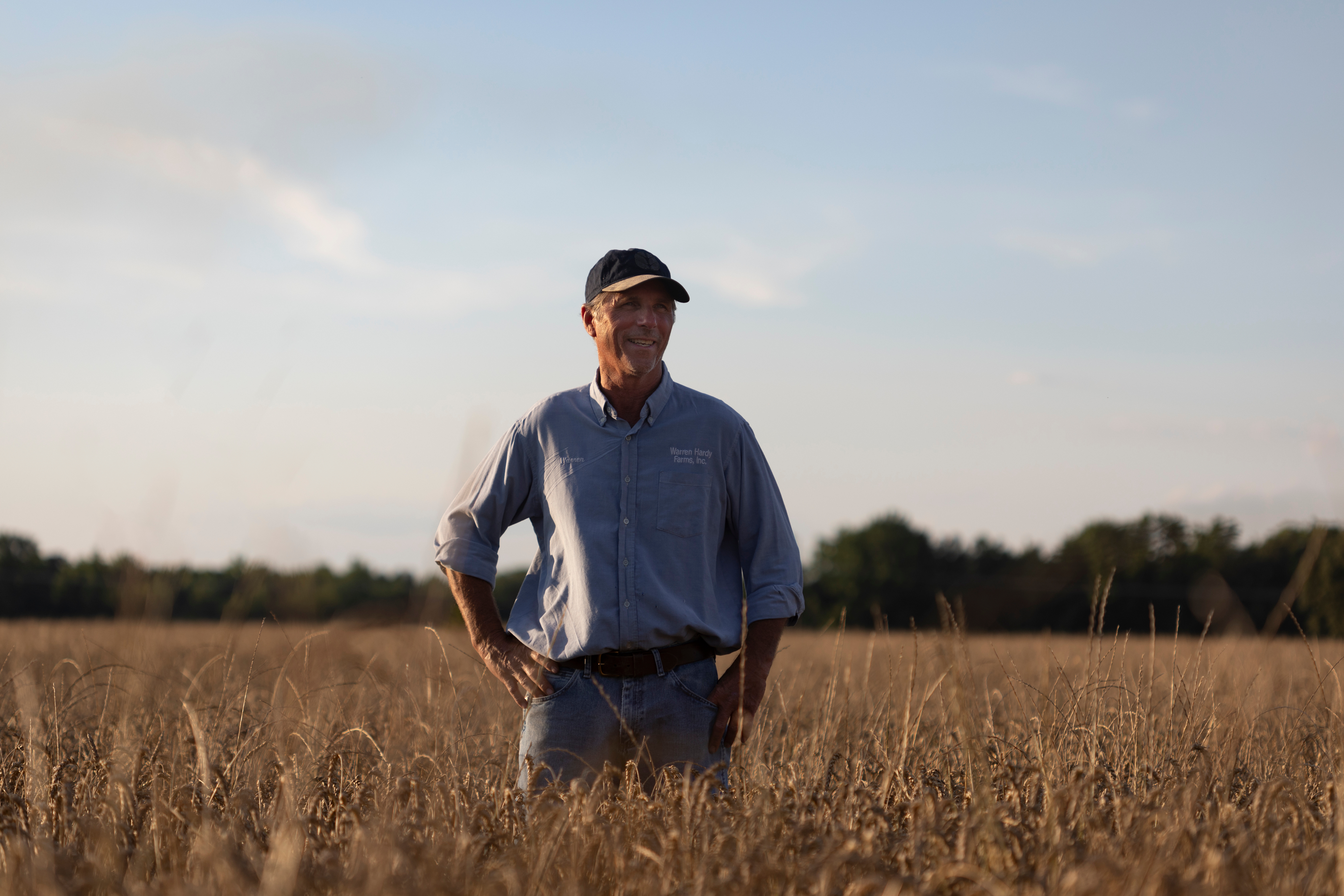
Farmer standing in a field
We had the commitments. What we didn’t have was data that could survive scrutiny. Arva gave us field-level numbers we can actually stand behind.
NAME AND
SURNAME
DIRECTOR OF SUSTAINABILITY, GLOBAL
FOOD & BEVERAGE COMPANY

Frequently Asked Questions

We already have Scope 3 data from our sustainability platform. Why does this matter?

Most platforms apply spend-based or industry-average emission factors to your procurement volume. SBTi V2.0 now explicitly calls for primary supplier data in material categories. Arva provides field-level data with a traceable chain of custody, that holds up under verification.

We source from hundreds of suppliers. Can this scale?

Yes. Arva handles farmer engagement, data collection, and methodology documentation across your existing network, without manual work from your team.

What does “SBTi FLAG–aligned” actually mean?

Yes. Arva handles farmer engagement, data collection, and methodology documentation across your existing network, without manuaFLAG v1.2 (effective March 2026) sets specific measurement and reporting requirements for food and ag companies, including how land-use emissions and removals must be quantified. Arva’s methodology is built to meet those requirements at the field level.l work from your team.

How do we get started?

Take the 5-minute assessment. It maps your current setup against what auditable Scope 3 data requires and shows you exactly where the gaps are.

AUDITABLE AGRICULTURAL SCOPE 3 DATA

Identify potential gaps in your Scope 3 reporting

Take Arva’s free Audit Risk Diagnostic to uncover hidden vulnerabilities in your Scope 3 data before they become reporting risks.

-75%
HIGH RISK

High audit exposure

Heavy reliance on default data leaves your sustainability claims open to regulatory and audit challenge.

Primary commodity volume 25k–100k MT/yr
Default-data reliance 50–99% default data
Framework alignment Insetting
Audit data readiness 5 / 15 controls in place
Audit exposure HIGH

The bar for Scope 3 agricultural data is rising.

With Science Based Targets initiative FLAG 2.0 and stricter assurance standards, modeled averages are no longer enough.

Transition from background assumptions to auditable, field-level primary data.

Disclosure standards are tightening

Regulatory frameworks and investor-grade assurance processes are increasingly requiring primary, supplier-level data over industry averages.

EXPLORE MORE →

Agricultural Scope 3 is the hardest to substantiate

Regulatory frameworks and investor-grade assurance processes are increasingly requiring primary, supplier-level data over industry averages.

EXPLORE MORE →

SBTi FLAG timelines are fixed

Demonstrating measurable, attributable progress requires a data infrastructure that many companies are still building.

EXPLORE MORE →

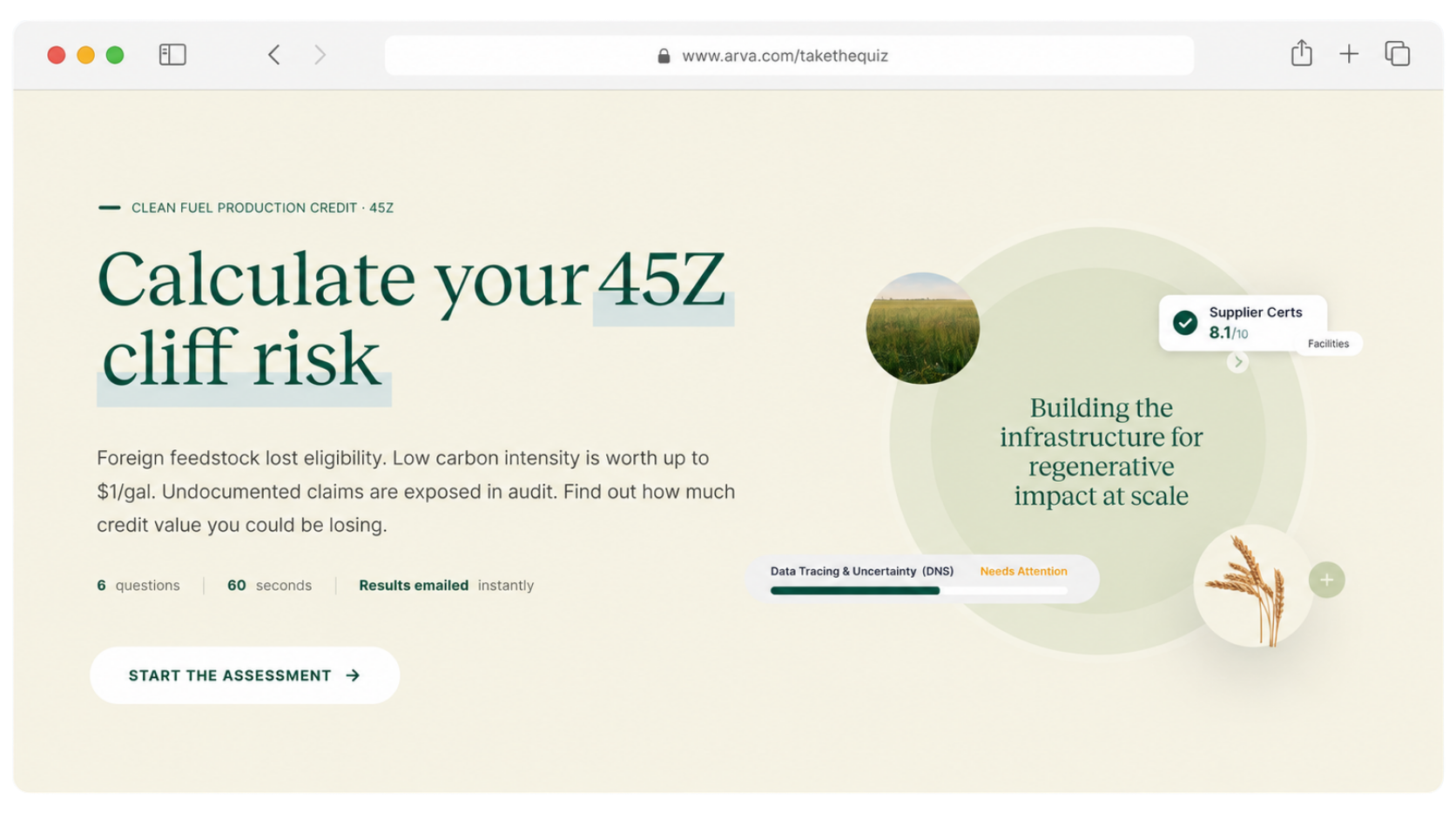
See Where Your Scope 3 Data Stands

Take the quiz and get instant, personalized results for free.

CALCULATE YOUR AUDIT RISK
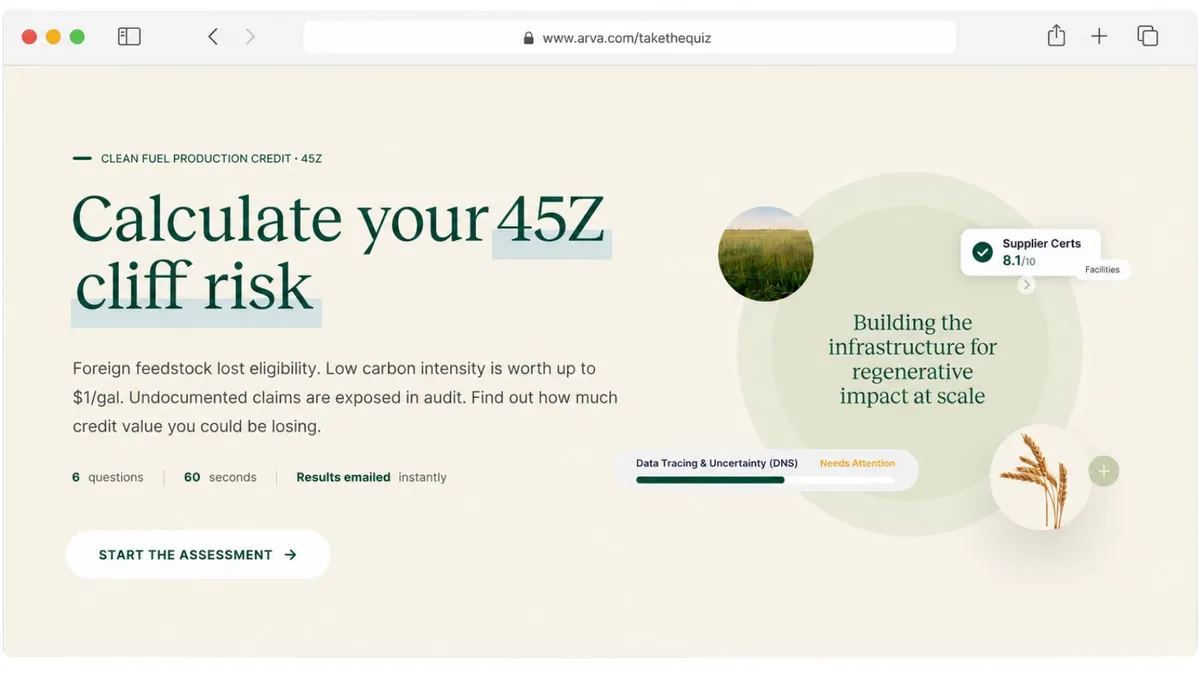
Arva Scope 3 quiz preview

Our Approach

Arva’s Field-Level Data is Built to Withstand Scrutiny

Step 1

Standards-Aligned Accounting.

Build a GHG Protocol-compliant Category 1 Scope 3 inventory. Transition from generalized secondary datasets toward emission factors grounded in real, on-farm activity data.

Step 2

Physical Traceability at Scale

Connect reported GHG outcomes to your sourcing regions through Mass Balance Chain of Custody tracking. Digital twin tokens follow each bushel from its exact origin through every point of aggregation, preventing overclaiming and double counting.

Step 3

Audit-Ready Scope 3 Insetting

Drive direct, verifiable mitigation outcomes within your actual supply shed. Arva’s framework delivers verified, defensible carbon insets that integrate into your Scope 3 inventory and support your SBTi FLAG targets.

TAKE THE QUIZ

Built for How Supply Chains Actually Work

SOURCING & REGULATORY CHALLENGE

Outdated Database Defaults

Traditional Scope 3 tracking relies on generic industry averages or spend-based secondary data that fail to reflect actual supply chain improvements.

↓
ARVA’S INFRASTRUCTURE SOLUTION

Field-Level Foreground Data

Captures actual cradle-to-farm-gate practice data directly from suppliers and growers, including tillage, cover crops and specific nitrogen use.

↓
PROTOCOL ALIGNMENT

GHG Protocol Scope 3 Cat. 1

Replaces background assumptions with granular, data-driven Program Emission Factors.

SOURCING & REGULATORY CHALLENGE

Agricultural Co-Milling

Crops are naturally mixed and blended at elevators or mills, breaking the physical link between reported GHG data and the buyer.

↓
ARVA’S INFRASTRUCTURE SOLUTION

Digital ID’ing of Grain (DIG)

Tokenizes every bushel at harvest with non-fungible assets containing exact geospatial origin and carbon intensity scores.

↓
PROTOCOL ALIGNMENT

Mass Balance Chain of Custody

Strictly aligns with standard environmental markets to ensure low-CI claims match physical volumes.

SOURCING & REGULATORY CHALLENGE

Severe Double-Counting Risk

Farm outputs generate multiple co-products across separate value chains, leading to duplicated reduction claims.

↓
ARVA’S INFRASTRUCTURE SOLUTION

Proportional Output Allocation

Enforces a centralized ledger and contractual locks to partition and distribute emissions data proportionately.

↓
PROTOCOL ALIGNMENT

Scope Sharing Architecture

Enables parallel supply chain participants to safely co-invest in interventions and co-claim verified outcomes.

SOURCING & REGULATORY CHALLENGE

Investor Scrutiny & Audit Risk

Unverified environmental claims and loose modeling face immediate compliance, regulatory or legal liabilities.

↓
ARVA’S INFRASTRUCTURE SOLUTION

Audit-Ready Substantiation

Provides an automated documentation package, including model manifests and certifier logs, for independent third-party validation.

↓
PROTOCOL ALIGNMENT

SBTI FLAG 2.0 & LSRS Standard

Delivers transparent, separate tracking of emissions reductions and land-based carbon removals.

Farmer standing in a field
We had the commitments. What we didn’t have was data that could survive scrutiny. Arva gave us field-level numbers we can actually stand behind.
NAME AND
SURNAME
DIRECTOR OF SUSTAINABILITY, GLOBAL
FOOD & BEVERAGE COMPANY

Frequently Asked Questions

We already have Scope 3 data from our sustainability platform. Why does this matter? +

Most platforms apply spend-based or industry-average emission factors to your procurement volume. SBTi V2.0 now explicitly calls for primary supplier data in material categories. Arva provides field-level data with a traceable chain of custody that holds up under verification.

We source from hundreds of suppliers. Can this scale? +

Yes. Arva handles farmer engagement, data collection and methodology documentation across your existing network, without manual work from your team.

What does “SBTi FLAG–aligned” actually mean? +

FLAG v1.2 sets specific measurement and reporting requirements for food and agricultural companies, including how land-use emissions and removals must be quantified. Arva’s methodology is built to meet those requirements at field level.

How do we get started? +

Take the 5-minute assessment. It maps your current setup against what auditable Scope 3 data requires and shows you exactly where the gaps are.

Do you know where your Scope 3 data stands?

Find out in under 5 minutes. Instant results.

  • ✓ A personalized Scope 3 Risk Score
  • ✓ Key risk areas identified
  • ✓ Recommended next steps
  • ✓ Optional consultation with an Arva expert

FAQ

We already have Scope 3 data from our sustainability platform. Why does this matter?

Most platforms apply spend-based or industry-average emission factors to your procurement volume. SBTi V2.0 now explicitly calls for primary supplier data in material categories. Arva provides field-level data with a traceable chain of custody, that holds up under verification.

We source from hundreds of suppliers. Can this scale?

Yes. Arva handles farmer engagement, data collection, and methodology documentation across your existing network, without manual work from your team.

What does “SBTi FLAG–aligned” actually mean?

Yes. Arva handles farmer engagement, data collection, and methodology documentation across your existing network, without manuaFLAG v1.2 (effective March 2026) sets specific measurement and reporting requirements for food and ag companies, including how land-use emissions and removals must be quantified. Arva’s methodology is built to meet those requirements at the field level.l work from your team.

How do we get started?

Take the 5-minute assessment. It maps your current setup against what auditable Scope 3 data requires and shows you exactly where the gaps are.

Do you know where your Scope 3

data stands?

Find out under 5 minutes. Instant Results.

✓ A personalized Scope 3 Risk Score

✓ Key risk areas identified

✓ Recommended next steps

✓ Optional consultation with an Arva expert